Showing posts with label Retrospective. Show all posts

Friday, 24 May 2013

Retrospectives: Forgotten Classics, Volume 1

When this whole Retrospective Reviews thing began, I knew I would focus on stuff that I liked. However, I reviewed the obvious albums, the usual suspects; Radiohead, Gorillaz and Death Grips all fell under my sights, and there was nothing overly new to say about them that hadn’t already been said. I’ve decided to start a sub-series, if you will, dedicated to the less heard-of albums and artists out there, or maybe even albums by larger artists that tend to get overlooked. This is Forgotten Classics, and I hope you find something that interests you.


Fat Worm of Error Pregnant Babies Pregnant With Pregnant Babies (Load, 2006)
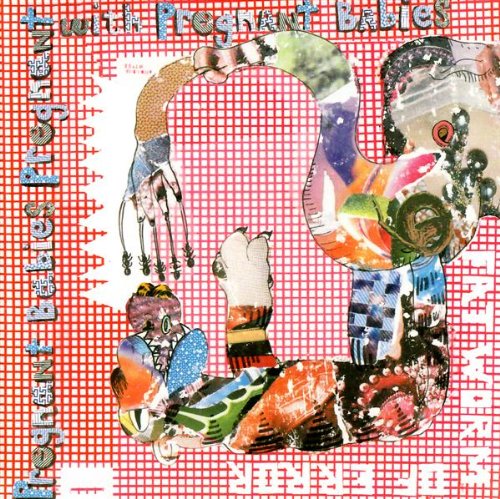


The preposterous album name probably gives the game away, but Pregnant Babies Pregnant With Pregnant Babies is a strange album. “Off-kilter” doesn’t even begin to describe the deconstructive sounds that are made here – it’s as if decades worth of rock music were ground up and eaten, partially digested by salivary enzymes, before being puked up in a mass of bile and stomach juices, and slapped onto CD. Yeah.

One review I’ve read before now describes Fat Worm of Error’s sound as “skronk”, and thanks to a quick Urban Dictionary search, that seems to be fairly reasonable summation. According to the site, the word is “used to define music that is grating, dissonant, and frequently avant-garde.” Yup, this album sounds pretty much like that, featuring vocals that are somewhere between shrieking and singing, sludgy guitars, and a variety of percussive noises that amount to something of a controlled chaos. I’m probably not making this album an easy sell, but it’s certainly not the most difficult album I’ve ever heard, and there are passages throughout that actually resemble structured music. Just try it. You never know, you may enjoy it.


The Music Tapes Music Tapes for Clouds and Tornadoes (Merge, 2008)


The Music Tapes is the pet project of Julian Koster, a member of the Elephant Six collective and some totally indie band called Neutral Milk Hotel. Koster utilises some unusual DIY instruments, such as the singing saw and a bowed banjo, and vintage recording equipment to create a fuzzy, lo-fi sound that’s decidedly experimental, but homely and autumnal.

2008’s Music Tapes for Clouds and Tornadoes is certainly the finest album to emerge from the project, for it sounds quite unlike anything else of its kind. The lyrics are ominous in places, optimistic in others, but Koster always delivers them with the same heartfelt passion, amidst the raw, crackly backdrop of minimal instrumentation and elements of musique concrete. It’s an album that I think fans of folk-ier music may appreciate, due in no small part to the intimate environment it creates for the listener. All you have to do is step inside, and relax for 40-or-so minutes.


Major Organ and the Adding Machine Major Organ and the Adding Machine (Orange Twin, 2001)


Another product of the Elephant Six collective, this (those guys are really good, aren’t they?). This time, it’s a supergroup of sorts, and some of the names involved certainly arouse suspicion about the project; Jeff Mangum, the really not-famous front-man of some obscure group called Neutral Milk Hotel, the aforementioned Julian Koster, Kevin Barnes of of Monteal (get your head around that one!), and many other Elephant Six members are believed to have contributed too.

Nobody knows who (or what) Major Organ is, but he is the leader of the Adding Machine, and his band made one self-titled album back in 2001. I believe there’s supposed to be some sort of narrative or over-arching theme behind this album, but I cannot hear it – instead, I hear noisy slabs of 60s psychedelic pop, interspersed with trippy sound collages. It’s fairly bonkers, to say the least, but don’t let the vibrato’d opener scare you off, for the 30 minutes that follow are a joyous ode to an era of catchy melodies, cryptic lyrics and copious use of psychedelics. It’s amazing to think that an album that features so much talent from the world of indie music is oft-overlooked, so I say go check out Major Organ and the Adding Machine for a blast of experimental, yet sort-of accessible pop.

Friday, 22 March 2013

Retrospectives: My Chemical Romance

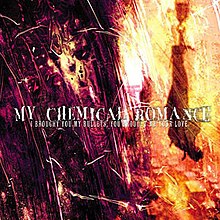
I was saddened to wake up this morning and read that My Chemical Romance have seemingly brought their band career to an end. After four studio albums, two sell-out world tours and 12 years of unconventional punk holiness, I think that it came as a shock to all when they left a small post on their official website, http://www.mychemicalromance.com/news/, claiming that "now, like all great things, it has come time for it to end". However, despite the sad news, I have decided to take it upon myself to review My Chemical Romance's debut studio album in the honour of Mikey Way, Ray Toro, the undeniably personable Frank Iero, and of course, His Royal Highness, Gerard Way.


Formation of the My Chemical Romance and Studio Album #1: I Brought You Bullets, You Brought Me Your Love

Following the horrendous attacks on the World Trade Centre on 11th September 2001, a witness drastically changed his life for good. He decided to form a band with his younger brother and close friend to express his feelings of depression and his general loss of faith in humanity. This man was Gerard Way.

Way wrote the song "Skylines and Turnstiles" in remembrance of the 9/11 attacks, and shortly after he recruited Ray Toro to the band due to the fact that he wasn't able to sing and play the guitar simultaneously, and therefore needed somebody to play alongside him. Way's brother, Mikey, suggested the band name after being struck by Irvine Welsh's novel, "Ecstacy: Three Tales of Chemical Romance", and soon after joined the band after hearing their first demo tape. Frank Iero become the fourth member of the band in 2002, shortly before the recording of I Brought You Bullets..., following the split of his former band Pencey Prep. The album was released 3 months afterwards through Eyeball Records, and although they had been given no outside promotion or support, they gained an impressive initial fan base through social networking sites such MySpace.

The album itself was an undoubtedly great debut effort, as the punk/metal sounds had been blended together so carefully and smoothly that they can only be described as an orgasmic rock purée. The lyrics are meaningful and anti-generic, and the emotions that come through are truly overwhelming in some parts of the album, especially in songs such "Skylines and Turnstiles" and "Vampires Will Never Hurt You" where the catchy lyrical patterns and heavy guitar riffs instantly mold themselves into your brain.

The one thing that I particularly love about I Brought You Bullets... is that you can't really compare it to another one of it's kind (apart from some of The Misfits earlier album, maybe), and the running story line throughout the whole album really shows that Way had profound knowledge of what makes a good alternative-rock band from a very early stage in his career; he was destined to be famous.

Whilst I was searching through the interwebs for a cheap physical copy of the album I stumbled upon a few reviews of I Brought You Bullets, You Brought Me Your Love, and after reading a few of them, I found this gem of a quote from a review that had been written on a small website in 2002. "Now, after all is said and done, it's obvious this band shows a lot of promise. But the sad truth is that you probably won't get a chance to hear them, considering their album is probably available in .01% of stores throughout the country and isn't even available to order online." This quote made me realise that it's not only myself that appreciates the work that various people have put in to My Chemical Romance, so on behalf of music lovers worldwide, thank you Reprise Records/Eyeball Records for making this small alternative-rock band from New Jersey the band that they are today.


Monday, 17 December 2012

Retrospectives: Radiohead

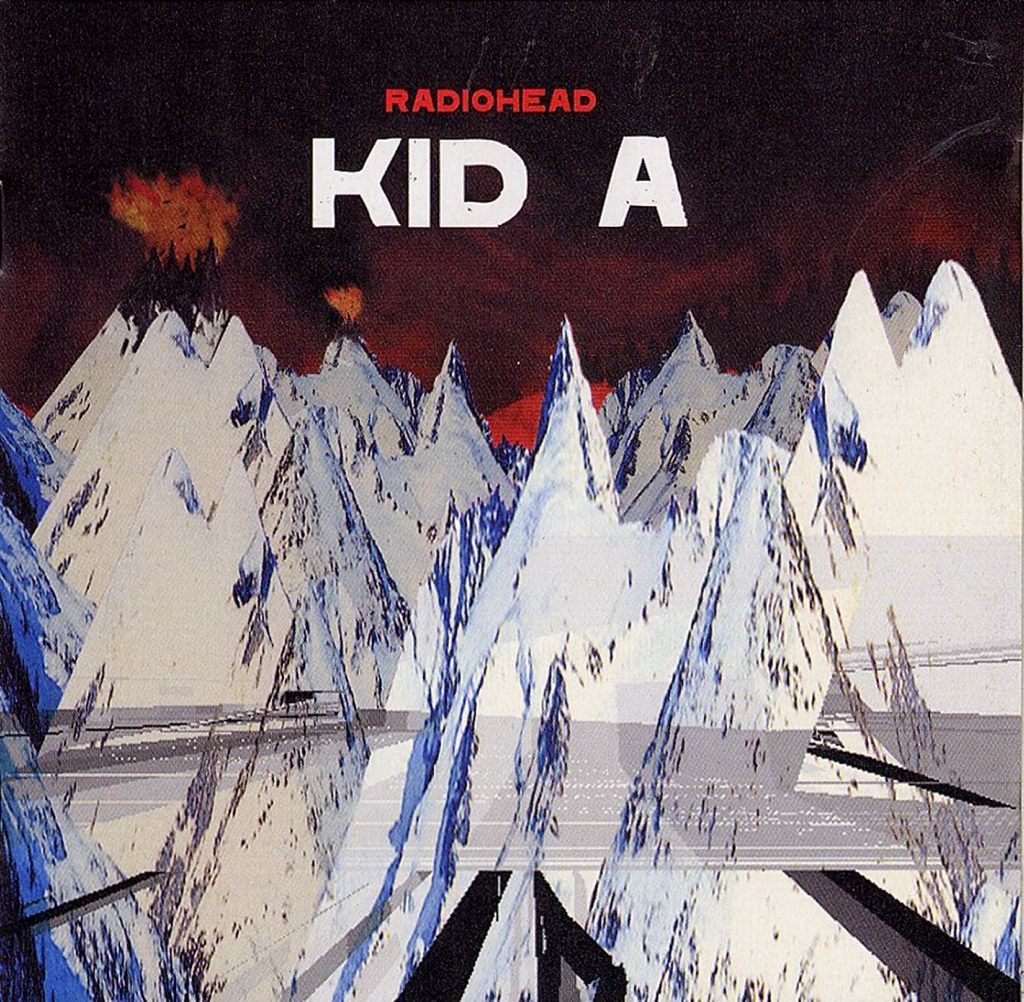
Radiohead Kid A (Parlophone)


Rarely do I band about the word 'perfect'. It is used far too much among my generation to describe trivial, mundane things; hairstyles, items of clothing, et cetera. Rarer yet do I use the word to describe music - for me, to call something perfect is to hold it so highly, nothing compares, nothing comes close. It is likely it will never be done again, a once-in-a-lifetime moment, a dream becoming reality. Superlatives needn't apply to Kid A; it doesn't need them. As far as I'm concerned, this is that perfect piece of music.

Why do it regard it so? I have a number of reasons. This is the sound of a revolution; Radiohead, a 'guitar' band that were tired of the gruelling touring and the bloated expectations, a band that was experiencing an agonising hangover from their past successes. They recognised this - continuing in the vein of OK Computer was going to kill them. So they destroyed themselves, and their defining 90s sound, and they became so much more; havoc and harmony, regret, false hope, distilled into 50 minutes of relatively guitar-less music.

The 'rock' hooks, the riffs, were abandoned, and instead listeners are greeted with a chilling synth organ, complete with a hidden bass track (revealed to those in possession of a high-fidelity stereo system), and the warped voice of Thom Yorke, akin to a fish writhing around above water, gasping for air, begging. "Everything, In It's Right Place" - somehow, it doesn't seem that way, as side one track one reveals yet more eerie depths as it progresses. Kid A follows; a lullaby, a warm duvet, a dream, smothered with a vocoder.

The National Anthem immediately drags you back into reality, providing a sharp needle for your dreamworld balloon, in the form of a ferocious bassline, and a freestyle jazz band that swarms like a colony of wasps. How To Disappear Completely proceeds to drag you back under; a track that bears resemblance to former Radiohead glories, filled with soothing strings. The ambient Treefingers ends side one, and at first it comes of as a calming relief, only to bear more haunting aspects upon close inspection - you can hear muffled cries for help, as if the song has something sinister lurking beneath the surface.

Side two begins with Optimistic; "finally, an anthem!" you may say, although the lyrics seem to be cynical, taunting even: "Try the best you can, the best you can is good enough" Yorke jeers, with what appears to be sarcasm, false optimism. In Limbo follows with a stream of arpeggios, overlapped by pleas, "I'm lost at sea, don't bother me", before crashing to a close, in a wave of alien beams. Idioteque picks up the pieces, with a thudding, jarring beat that echoes Aphex Twin and Bjork, and a strained synth line. "Women and children first" foreshadows a mushroom-cloud apocalypse, where humanity is at odds with itself once again. The screech of the strings segue into Morning Bell; another song that can identify itself with the Radiohead of yore, yet feels like an entirely spookier direction altogether. Finally, the journey culminates in Motion Picture Soundtrack, a song that predates hit single Creep, blossoms into life with an organ and harp, only to shrink back into nothingness, with the ever cryptic, "I will see you, in the next life". The hidden track, believed to be called Genchildren, follows, with a soaring ascension into the musical heavens.

Make no mistake, Kid A is not to be appreciated as background noise. This is not an album you can rock out to on your mates speakers; this requires careful attention. Give it this, and it transcends anything you may consider to be music - it becomes an emotional journey, a rollercoaster of highs and lows. An inhuman, yet oddly familiar fantasy world, represented by 50 minutes of digital sound waves pressed onto a compact disc (or whatever platform you may choose).

That, dearest readers, is the sound of perfection.

(Not So) Retrospectives: Death Grips

A name on the lips of many a music blogger, and fans of music in general, is Death Grips, the alternative hip-hop outfit (comprised of Stefan "MC Ride" Burnett, and producers Zach Hill and Andy Morin) that has dealt with a fair amount of controversy in the past few days and months. Following the April release of The Money Store, the groups major label debut, it became clear that they were certainly worth keeping an eye out for, especially considering they had teased at No Love, the follow-up album, which was to be released in the fall. No Love became No Love Deep Web, and the album was cryptically teased further through a series of archive files, that revealed details about the release in Braille, QR code, and Morse, but to name a few. It quickly became one of the most highly anticipated releases of the year, but the saga took a turn for the stranger when record label Epic allegedly pushed the release back to 2013. The group took issue with this, and in one of the most daring stances against a major label ever, No Love Deep Web was self-released by Death Grips on October 1. To top off the controversial manner of its release, the artwork was revealed to be an erect phallus, complete with the album's title Sharpied onto it. No Love Deep Web has had over 30 million legal downloads since its release, and in the past few days, the group have been dropped by Epic, in a move that suprised nobody. So, here's to Death Grips; 2012's most brilliant troublemakers. Oh, and the albums are pretty good as well.


The Money Store

Following Exmilitary, the 2011 mixtape, Death Grips were an exciting prospect, and with The Money Store, they just about fulfilled all of their promises. To describe the album, one could only use the word harsh; from the production to the lyrics, The Money Store is brash, often alienating, but always thrilling. And in a world filled with prima donna popstars and "rappers", the album is an adrenaline rush, and a wildly exciting experience. The production is abrasive and loud, with an eclectic range of influences, from rave to techno, to DnB to electro. Lyrics deal with racial issues, paranoia, and an age of materialism, particularly in closer Hacker, where pop culture references are dropped at will - MC Ride shouts that Gaga can't handle this shit, after claiming he will make your waters break in the Apple store - and it flows as a stream of consciousness, off-the-top-of-the-head piece of writing. The album is an outpouring of rage, and is gleefully unfocused in doing so. Overall then, The Money Store remains one of the calendar year's most essential listens, and is certainly a contender for album of the year. For any fans of Exmilitary worried about the group going pop following their major record deal, The Money Store is a chaotic, angry affirmation that they needn't fret.


No Love Deep Web 

In the aftermath of The Money Store, you could be forgiven for being excited about No Love Deep Web, the second album released by Death Grips in 2012. The downright bizarre, albeit innovative, promotion of No Love Deep Web only heightened the hype surrounding it. Just as it seemingly reached fever pitch, the albums release date was pushed back to 2013; the rest, as was explained in the opening paragraph, is history. So, here we have the single most controversial release of the year, in all its glory. How does it stack up against its predecessor? As it turns out, the group can be even more angry; the album is fairly sample-less, with dark Roland drum machine sounds being the key component of the production, and the production certainly feels a little colder, aggressive even, for it. Lyrics are, true to form, shouty and brimming with anger; suicide seems to be a constant running throughout No Love Deep Web, as MC Ride asks you to "Die with me/ Blow out the lights, take your life/ Ride the falling sky with me". He also comes across as quite fierce, more so than ever, providing quotables such as "I'm the coat hanger in your man's vagina", found on track Deep Web. No Love Deep Web is an undeniably riotous listen, and although it doesn't match the sheer inventiveness of The Money Store, it is intriguing nonetheless, and well worth the free download.